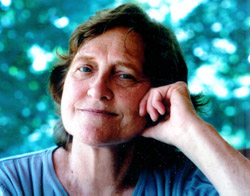






Postings From Ruth Cowan - 2012
April 17, 2012 Comments by students following the screening hosted by the Black Law Students Forum at the University of Cape Town on 17th April. April 6, 2012 South Africa's post apartheid constitution, acknowledging that an independent judiciary is essential to democracy declared the establishment of an indepedent judiciary. However, since the heady beginning of the country's New Democracy, there have been many efforts to weaken and even challenge that independence. Incorporated under the tab "Courts" on this website is "The Rise and Fall of Two Chief Justices", a paper prepared by Gilbert Marcus and Jason Brickhill. It tells the of a recent controversy regarding the judiciary's independence. March 28, 2012 Courting Justice has engaged thousands of middle school and high school students in south Africa through the creative and energetic efforts of Annette Fatti. Annette just returned from engaging students in the province of KwaZuluNatal. Here are her reflections upon returning home after ten days in Durban and Pietermaritzburg: Once again I really enjoyed showing Courting Justice - each time I watch the film I enjoy it more! The trip was a huge success and the young adults at high schools where I visited made me proud to be a South African. The keen desire of the teenagers I met to keep democracy alive and well here in South Africa dispels so much of the pessimism I hear expressed so often from some friends and acquaintances!! The comments made by the girls (and many boys) were so positive and eloquent. Many of them said the film had changed their perspective of the life in South Africa and of the government. For many, CJ inspired the possibility of a new career choice. February 21, 2012 Ghandi's granddaughter was present at the screening on Human Rights day and I had some lovely photos of her - I gave each person present a copy of the film and they clearly enjoyed it and thought it a most valuable teaching tool for young South Africans. The Wednesday screening was for the Amnesty International group and they were very enthusiastic about CJ!! They have promised to give me many more contacts in KwaZuluNatal so I will probably be able to make another trip there this year! Getting to Ottawa for the Courting Justice November event hosted by South Africa’s High Commission to Canada meant leaving 60 degrees to 10 below, a cancelled flight, rerouting with a mile long dash to catch the connecting flight. But, the audience obliterated the cold and the transportation drama. I introduced the film and participated in the post screening discussion. I sat next to two South Africans who were from the same rural area shown in the film and when those, in the film, sang, they joined in. Several in the audience left the event committed to arrange for screenings elsewhere in Canada and in Africa, and the High Commission wants to bring Courting Justice to all of Canada’s provinces. An added pleasure for me was interest expressed by members of Canada’s International Women’s Forum. As a member of a “sister” forum in New York, I contacted IWF Canada to invite members in the Ottawa area to join me. They did. One forum member, a Senator, was unable to attend—but, eager to meet me, she invited me to Parliament for lunch. Before I left Ottawa she had already spoken about Courting Justice to a close friend, a University President who immediately started the process for Courting Justice to be seen at her university... Three days after returning from Ottawa, I was in San Francisco for two Courting Justice events. The first was hosted by the Judicial Council of California—Administrative Office of the Courts and was held at the State building, which houses staff from the governor’s office, as well as personnel from the Supreme Court and Court of Appeal, First Appellate District. AOC employees were able to receive 1.5 hours of education credit. DVDs were provided to all AOC regional offices and it was posted on archived audiocasts of AOC Forums in the Training section of the AOC Intranet. The second event, hosted by friends Sharon Miller and Alan Fisher, was at San Francisco University of California. The audiences at both events were deeply moved by Courting Justice. Many left committed to host or arrange for important screenings. In between the two events, I met with a magistrate from Kenya. She was in San Francisco studying for an advanced law degree—the Dean of the law school where she is studying, and not incidentally an acquaintance, introduced us. The magistrate, also deeply moved by Courting Justice,committed herself to show the film in Kenya and at a regional meeting of African women judges. When I returned from San Francisco I received an e mail from an acquaintance in London advising me she had shown the film to members of the UK International Women’s Forum affiliate and that one of those present, a judge, wants to have it shown at an international meeting of women judges scheduled for London this spring. For me, the most meaningful testimonial comes from those who see Courting Justice and want to bring it to others. January 20, 2012 Dr. Beatriz Kohen, Directora del Programa Genero y Derecho, Decano de la Facultad de Derecho, Universidad de Palermo, Buenos Aires, Argentina. January 6, 2012 The Final Prize; My Life in the Anti-Apartheid Struggle written by Norman Levy, has just been published. The author, effectively integrating biography and history, was engaged in opposing apartheid from the mid 1940's to the 1990's. In 1956 he, along with 155 others, was tried for treason in the apartheid government's effort to suppress the opposition movement. The trial was, after five grueling years, dismissed as a result of prosecutorial incompetence. He was later held under the 90 Day Detention Law and in 1965 was tried and imprisoned. Norman Levy's account is riveting and beautifully written. When I am asked, as I frequently am, about the status of democacy in South Africa, I quote Norman Levy's final paragraph: " There is still much work to be done and our political culture has yet to match our liberal constitution. After 16 years of democracy the euphoria of liberation remains, but it is marred by contradictions that in our innocence we did not contemplate. For all our imaginings of a new society and a harmonious rainbow nation, these are ideals still in the making. There is no promised land, no earthly paradise, only the imperfect place we ourselves create and the vision we have to change it for the better." |
Read 2011 Postings: November 22 • November 16 • November 11 Read 2010 Postings: |